Blog→Personal brand→Crafting Your Personal Brand Statement: Examples to Inspire…
Crafting Your Personal Brand Statement: Examples to Inspire You
Updated 7 min read
Discover effective personal brand statement examples to elevate your LinkedIn profile.
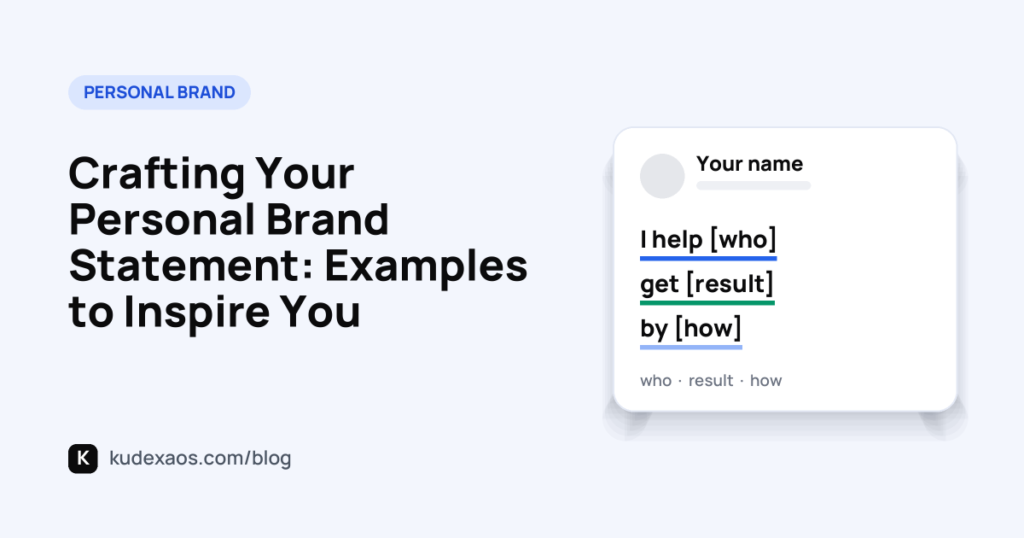
A personal brand statement clearly defines who you help and what you achieve for them. Instead of saying 'I help people,' be specific, like 'I help B2B sales teams improve their closing rates.'
- A strong personal brand statement defines who you help and what results you achieve.
- Be specific to attract the right audience.
- Use a clear structure for your statement.
- Review and refine your statement regularly.
On this page
What is a personal brand statement?Why is specificity important?How to structure your statement?What are some examples?What common mistakes to avoid?How can I refine my statement?Questions people askYou know you need a personal brand statement. You see others with clear, impactful ones, but yours feels vague. You might write something like, 'I help people.'
By the end of this article, you'll have specific examples to create a strong personal brand statement that resonates with your audience.
What is a personal brand statement?
A personal brand statement summarizes who you are and what you do. I see this in almost every profile I check. Many people write vague lines like, 'I help businesses.' This does not tell anyone anything specific about your role or your audience. It costs you connections and opportunities.
You need to highlight your target audience and the results you provide. Instead of saying, 'I help businesses,' a better line would be, 'I help tech startups increase their online visibility.' This is clear and direct. It tells people exactly who you work with and what you achieve for them.
When writing your statement, be precise about your audience. If you are a marketing consultant, specify the types of businesses you support. For example, 'I help small retail businesses improve their social media strategy.' This gives people a clear idea of your niche.
The fix is simple. Identify your audience and the results you create for them. Write your statement in plain words. This approach works because it connects with your audience and shows your value immediately. A well-crafted statement can open doors to new opportunities.
I help businesses.
I help tech startups increase their online visibility.
Why is specificity important?
I see this in almost every profile I check. People write things like, 'I help businesses grow.' This statement is vague. It doesn't tell anyone what kind of businesses or how growth is measured. This lack of clarity costs them potential clients. When you say, 'I help small business owners create effective marketing strategies,' you are direct. You define your audience and the service you provide.
Specificity is important because it draws in the right people. When potential clients see a clear statement, they can immediately understand how you can help them. For example, 'I help startups improve their online presence through targeted social media campaigns' is much more appealing than a generic statement.
Being clear also builds trust. If your statement is specific, it shows you know your audience and their needs. This is what I tell people. They need to connect their skills to real problems. A focused statement gives potential clients confidence that you understand their challenges.
To refine your statement, think about your ideal client. Define who they are and what they need. Then, articulate how you solve their problem. This process takes time but leads to a more impactful brand statement. It makes your profile stand out.
In my experience, the best profiles are those that clearly communicate their niche. Using specific terms not only helps in attracting the right audience but also positions you as an expert in your field. This is why I built Kudexa OS to help create those clear, targeted messages.
I help businesses grow.
I help small business owners create effective marketing strategies.
How to structure your statement?
I see many profiles that struggle with clarity. They often say things like, 'I help businesses grow' or 'I assist clients in achieving success.' These lines are vague and do not pinpoint who they serve or what they actually do.
Instead, you can use a simple format: 'I help [target audience] get [specific results].' This structure is direct and easy to grasp. For example, instead of saying 'I help businesses grow,' you could say, 'I help small retail businesses increase their foot traffic.'
This approach works because it immediately tells your audience who you are targeting and what benefit they can expect. It cuts through the noise and speaks directly to the needs of your potential clients.
Another example could be, 'I help financial advisors improve their client retention rates.' This is clear and shows that you understand the specific challenges faced by that audience. It makes your role tangible and relevant.
By using this structure, you not only clarify your message but also position yourself as a specialist in your field. When your audience sees you understand their needs, they are more likely to engage with you. This is what I built the Kudexa OS system for, to help you articulate your personal brand effectively.
I help businesses grow.
I help small retail businesses increase their foot traffic.
- Identify your target audience Who do you want to help?
- Define the results you provide What do you help them achieve?
- Use clear language Avoid jargon and be specific.
- Follow the structure I help [target audience] get [results].
Is your personal brand statement as clear as it could be? Check your free brand scoreGet a free audit of your LinkedIn profileTry Kudexa OS free for 14 days.
What are some examples?
Here are a few examples of personal brand statements that I see often on LinkedIn. Many profiles say things like, 'I help people with their marketing.' This is too vague and doesn't tell anyone what you actually do.
Instead, a stronger statement would be, 'I help small business owners develop effective marketing strategies that increase their online presence.' This specifies the audience and the outcome, making it clear who you help and how.
Another common line is, 'I assist clients with their projects.' This sounds generic and lacks impact.
A better version would be, 'I help tech startups manage their product development to meet deadlines and budget constraints.' This shows a defined role and a clear benefit to the audience.
When you use specific language, like in these examples, it sharpens your message. It tells your audience exactly what to expect from you and encourages them to engage.
I help people with their marketing.
I help small business owners develop effective marketing strategies that increase their online presence.
What common mistakes to avoid?
I see this in almost every profile I check. People often write, 'I help people succeed.' This kind of language is vague and doesn't connect with anyone. It costs them potential connections and opportunities. Without clarity, your profile becomes just another generic statement.
Instead, I suggest you get specific. Change that line to, 'I help small business owners increase their revenue through targeted marketing.' This tells your audience exactly who you work with and how you can help them. The difference is clear.
Another common mistake is using broad terms like 'expert' or 'consultant' without context. For instance, saying 'I am a marketing expert' doesn't tell anyone what kind of marketing or who you serve. It leaves too much open to interpretation.
Instead, specify your niche. A better line would be, 'I am a digital marketing consultant for e-commerce brands looking to boost their online sales.' This gives your audience a clear picture of your expertise and target audience.
I also see profiles that list many different roles, which can confuse potential clients. If you say, 'I am a coach, a writer, and a speaker,' it dilutes your message. Focus on one primary role that defines your brand. For example, 'I am a business coach for startup founders.' This clarity builds trust and authority.
I help people succeed.
I help small business owners increase their revenue through targeted marketing.
How can I refine my statement?
Review your current statement. Ask yourself if it clearly defines your audience and the results you offer. I see many profiles say things like, 'I help businesses grow,' but that's vague. Instead, be specific. If you work with tech startups, say, 'I help tech startups increase their customer acquisition by 30% in six months.'
If your statement doesn't cut it, rewrite it using the examples and structure provided. This is where I see people struggle. They often get too caught up in buzzwords or jargon. Instead, focus on what you do and who you do it for. It's about clarity.
This process helps clarify your brand. When you define your audience and the results you deliver, you attract the right clients. I find that profiles with clear statements receive more engagement and connection requests. They stand out in a crowded space.
Don't hesitate to revise your statement multiple times. Each version should get closer to what you want to convey. The clearer you are, the easier it is for others to understand your value. I often recommend running your statement by peers for feedback, too.
I help businesses grow.
I help tech startups increase their customer acquisition by 30% in six months.
Take the time to craft your personal brand statement. It will guide your branding efforts and connect you with your audience. Use Kudexa OS to help you refine your brand.
Questions people ask
What makes a good personal brand statement?
A good personal brand statement is clear, specific, and focused on your target audience and the results you provide.
How often should I update my personal brand statement?
You should update your personal brand statement whenever your focus changes or you gain new skills.
Can I use my personal brand statement in other places?
Yes, you can use your personal brand statement on your LinkedIn profile, website, and other professional platforms.

The Kudexa Weekly: One practical LinkedIn play every week: your profile, your posts, your list and your offer.
One email a week. Unsubscribe any time.Six taps, under a minute. Your score out of 100 and three headlines written for you.
Check your brand score, free →Your score first, then your headline, About and Featured checked line by line. Free, no card.
Get your free LinkedIn audit →Every part of Kudexa OS, free for 14 days. ₹0 today, cancel any time before the free days end.
Start your 14-day free trial → Personal brand
Personal Brand Examples: What Strong LinkedIn Profiles Have in Common
Discover the key elements that make LinkedIn profiles stand out and attract opportunities.
Personal brand
Personal Brand Examples: What Strong LinkedIn Profiles Have in Common
Discover the key elements that make LinkedIn profiles stand out and attract opportunities.
 Personal brand
How to Build Your Personal Brand on LinkedIn, Step by Step
A clear guide to building your personal brand on LinkedIn.
Personal brand
How to Build Your Personal Brand on LinkedIn, Step by Step
A clear guide to building your personal brand on LinkedIn.
 Personal brand
How to Turn Your Personal Brand into a Business
Transform your online presence into a thriving business.
Personal brand
How to Turn Your Personal Brand into a Business
Transform your online presence into a thriving business.