Blog→Personal brand→How to Turn Your Personal Brand into a…
How to Turn Your Personal Brand into a Business
Updated 7 min read
Transform your online presence into a thriving business.
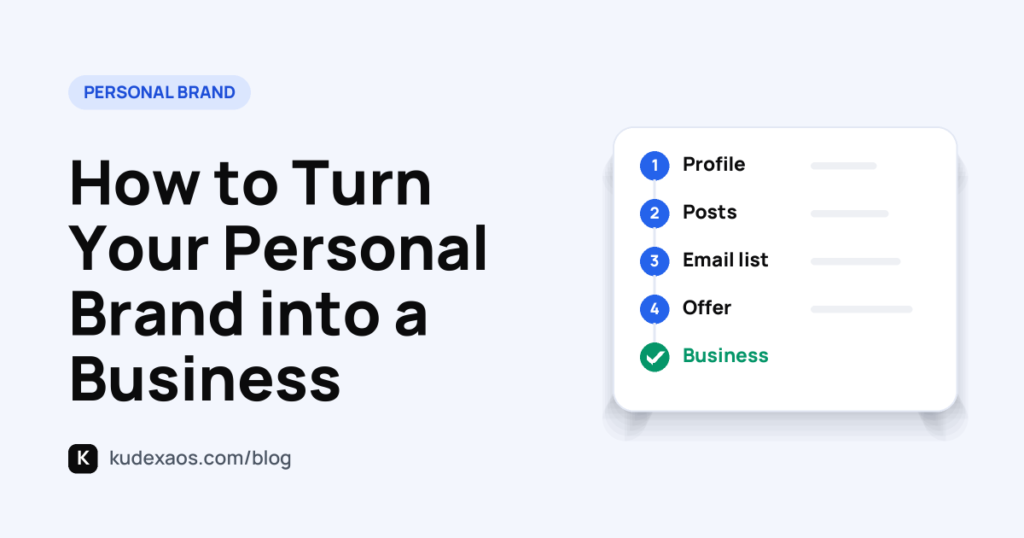
To turn your personal brand into a business, focus on defining your niche, understanding your audience, and creating offers that meet their needs. This involves refining your messaging and building strong relationships.
- Define your niche clearly to attract the right audience.
- Understand what your audience truly wants.
- Create offers that solve specific problems.
- Refine your messaging for clarity and connection.
- Engage actively to build lasting relationships.
On this page
How do I define my niche?What does my audience want?How can I create valuable offers?How do I refine my messaging?How can I build relationships?What should I do next?Questions people askYou post regularly. You have followers. Yet, you feel like your brand isn't translating into business.
By the end, you'll know clear steps to monetize your personal brand.
How do I define my niche?
Identifying your niche is essential. I see many profiles say broad things like, 'I help people achieve their goals.' This approach lacks clarity and fails to attract the right audience. When you don't specify who you help, you miss out on connecting with those who need your expertise.
A more effective line would be, 'I help sales trainers close more deals with effective strategies.' This is specific and tells potential clients exactly what you offer and who you serve.
To define your niche, start by asking yourself who your ideal audience is. What problems do they face? What solutions can you provide? Be as precise as possible. This clarity will help you craft a message that connects with your target market.
Next, think about your skills and experiences. What unique insights do you bring to the table? Combine these with your audience's needs to create a compelling niche. This is where you will find your strength.
When you define your niche clearly, you attract the right people. They will see you as the solution to their specific problems. This connection is what builds trust and leads to opportunities. Using a system like Kudexa OS can help you refine this process further.
I help people achieve their goals.
I help sales trainers close more deals with effective strategies.
What does my audience want?
I see this in almost every profile I check: people say they offer services without really understanding who they are speaking to. They write lines like, 'I offer coaching services.' This approach misses the point. When you don't specify your audience, you risk losing their interest.
Understanding your audience's needs is key to creating valuable offerings. Engaging with them helps you discover their specific challenges. For example, instead of saying, 'I offer coaching services,' you could say, 'I provide tailored coaching for B2B sales teams struggling with lead conversion.' This makes it clear who you help and how you can address their pain points.
When your message connects with your audience, they are more likely to engage with you. They want to know that you understand their unique situation. By being specific in your communication, you build trust and credibility, which are essential for a successful personal brand.
Take the time to interact with your audience through comments, messages, or surveys. Ask them about their biggest challenges and needs. This will not only inform your offerings but also show that you genuinely care about helping them. When they see you as someone who understands their world, they are more likely to connect with you.
Remember, specificity matters. The clearer you are about who you help and how you help them, the more effective your messaging will be. This clarity will attract the right people to your brand, making it easier to turn your expertise into a business. In the Kudexa system, we focus on this step to ensure your personal brand is positioned effectively.
I offer coaching services.
I provide tailored coaching for B2B sales teams struggling with lead conversion.
- 1Define Your NicheIdentify your specific area of expertise.
- 2Understand Your AudienceEngage and discover their needs.
- 3Create Valuable OffersDesign solutions that address their problems.
- 4Refine Your MessagingMake your value clear and relatable.
- 5Build RelationshipsEngage actively with your audience.
- 6Take ActionLaunch your services and track results.
Not sure where yours folds? Check your free brand scoreGet your free profile auditTry Kudexa OS free for 14 days.
How can I create valuable offers?
I see many profiles stating vague offers. They often say things like, 'I sell online courses.' This doesn't tell anyone what problem you're solving or who you're helping. When your audience sees this, they don't know if your course is right for them. It costs you potential clients and limits your reach.
Instead, you need to be specific about what you offer. Instead of saying, 'I sell online courses,' you could say, 'I offer a course on mastering sales calls for B2B teams.' This clearly states the benefit and the target audience. It helps the right people find you.
To create valuable offers, start by identifying the specific problems your audience faces. Ask yourself what unique solutions you can provide. Think about the skills or knowledge you have that can help them overcome their challenges. This clarity will guide your offer creation.
Once you have clarity on the problem and solution, craft your offer in simple terms. Make it clear who it's for and what they will gain. This approach builds trust and makes your offer more appealing. When your audience understands the value, they are more likely to engage.
How do I refine my messaging?
I see this in almost every profile I check. People write things like, 'I deliver high-impact training.' It sounds impressive, but it doesn't tell anyone what that really means. It costs them potential clients who want to know how they can help them.
To refine your messaging, start by asking yourself, who do you serve? What specific problems do they face? Then, rewrite your statements to be direct and relatable. Instead of vague terms, use clear language that describes the outcome you provide.
For example, instead of 'I deliver high-impact training,' say, 'I help sales teams talk to clients in a way that closes deals.' This tells your audience exactly what you do and how it benefits them. It builds trust and clarity.
Focus on the results you create for others. This makes your messaging more engaging. When people understand the value you offer, they are more likely to connect with you. It leads to better conversations and potential opportunities.
Using specific language helps you stand out. It shows that you understand your audience. With a clear message, you can attract the right people who need your expertise. That's where Kudexa OS comes into play.
I deliver high-impact training.
I help sales teams talk to clients in a way that closes deals.
How can I build relationships?
I see this in almost every profile I check. People often say, 'I post content occasionally.' This approach costs them potential connections and trust. When you don’t engage, your audience feels disconnected. They need to know you care.
Here's what I tell people. Instead of posting sporadically, make it a habit to interact. A simple shift to, 'I actively engage with my followers by answering their questions and sharing insights in real time,' shows commitment. This builds rapport and encourages more interaction.
Engagement can happen in various ways. Respond to comments on your posts. Send personalized messages to new connections. Host live sessions to answer questions. Each interaction strengthens your network and opens doors for opportunities.
I recommend setting aside time each week for this. Dedicate 30 minutes to respond to comments and messages. Schedule a live session monthly. This consistent effort pays off. Your audience will feel valued and more likely to engage further.
Building relationships is about being present and approachable. When people see you actively participating, they trust you more. They’re more likely to refer you or seek your services. This is how you lay the foundation for a strong personal brand and business.
With Kudexa OS, you can track your engagement and see how it impacts your growth. Use it to refine your approach and ensure you’re connecting effectively.
I post content occasionally.
I actively engage with my followers by answering their questions and sharing insights in real time.
What should I do next?
After you have defined your niche, identified your audience, crafted your offers, and refined your messaging, it’s time to take action. I see too many profiles that say things like, 'I want to start a business.' This statement leaves it vague and passive. Instead, you should be clear and proactive about your next steps. A better way to express your intentions is, 'I am launching my coaching program next month to help sales teams excel.'
Taking this approach shows commitment and clarity. It tells your audience exactly what to expect and when. This kind of specificity builds trust and anticipation. When you state your plans clearly, you invite others to engage with you and support your efforts.
Next, start promoting your services. Use your updated messaging to share your programs, workshops, or consulting services. Post updates about your progress, share insights related to your niche, and invite conversations. This keeps your audience informed and involved, creating a sense of community around your brand.
Finally, track your progress. Regularly assess how your audience responds to your promotions. This allows you to adjust your strategies based on what works and what doesn't. By being responsive to your audience's needs, you strengthen your relationships and enhance your offerings. This is the foundation for a successful business built on your personal brand.
Remember, the key is to be specific and direct. This transparency not only defines your path but also aligns your audience with your goals. In this way, you create a clear roadmap for your personal brand to transition into a business with the help of Kudexa OS.
I want to start a business.
I am launching my coaching program next month to help sales teams excel.
Start taking steps today to turn your personal brand into a business with Kudexa OS.
Questions people ask
What is a personal brand?
A personal brand is how you present yourself and your expertise to the world. It's your unique value proposition.
How can I monetize my personal brand?
Monetization can come from coaching, consulting, selling products, or offering services that align with your expertise.
Why is understanding my audience important?
Knowing your audience helps you tailor your offerings to meet their needs, increasing the chances of conversion.
What if I don't have a large following?
A smaller, engaged audience can be more valuable than a large, passive one. Focus on building relationships.

The Kudexa Weekly: One practical LinkedIn play every week: your profile, your posts, your list and your offer.
One email a week. Unsubscribe any time.Six taps, under a minute. Your score out of 100 and three headlines written for you.
Check your brand score, free →Your score first, then your headline, About and Featured checked line by line. Free, no card.
Get your free LinkedIn audit →Every part of Kudexa OS, free for 14 days. ₹0 today, cancel any time before the free days end.
Start your 14-day free trial → Personal brand
Personal Brand Examples: What Strong LinkedIn Profiles Have in Common
Discover the key elements that make LinkedIn profiles stand out and attract opportunities.
Personal brand
Personal Brand Examples: What Strong LinkedIn Profiles Have in Common
Discover the key elements that make LinkedIn profiles stand out and attract opportunities.
 Personal brand
Crafting Your Personal Brand Statement: Examples to Inspire You
Discover effective personal brand statement examples to elevate your LinkedIn profile.
Personal brand
Crafting Your Personal Brand Statement: Examples to Inspire You
Discover effective personal brand statement examples to elevate your LinkedIn profile.
 Personal brand
How to Build Your Personal Brand on LinkedIn, Step by Step
A clear guide to building your personal brand on LinkedIn.
Personal brand
How to Build Your Personal Brand on LinkedIn, Step by Step
A clear guide to building your personal brand on LinkedIn.